
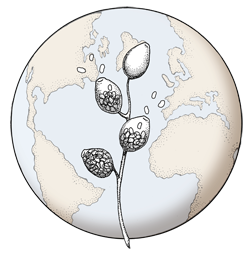

Noncaducous sporangia showing ovoid shape and papillate condition
Photo Gallery
Site will be retired 9/1/2026
This site is no longer being developed and will be retired on September 1, 2026. Please contact us if you have any questions or would like to provide support to continue the project.
|
P. frigida sporangia 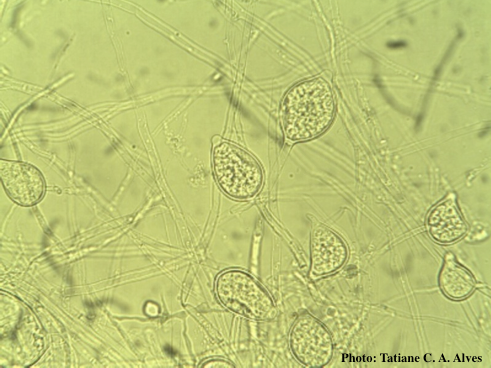 |
P. cactorum bleeding canker 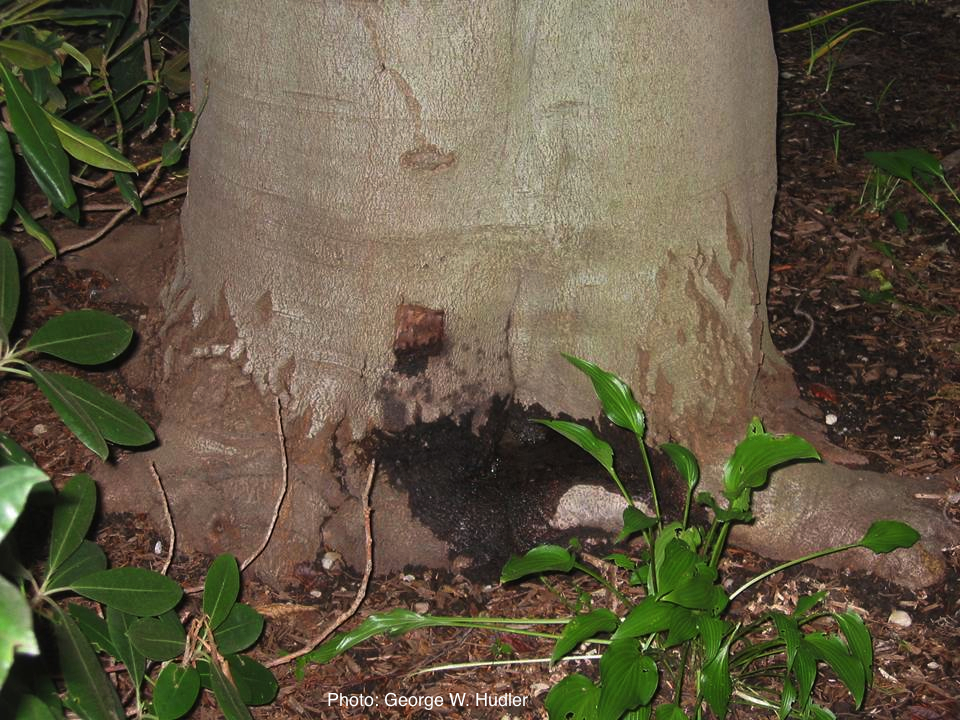 Bleeding canker on European beech (Fagus sylvatica) |
P. pluvialis sporangium 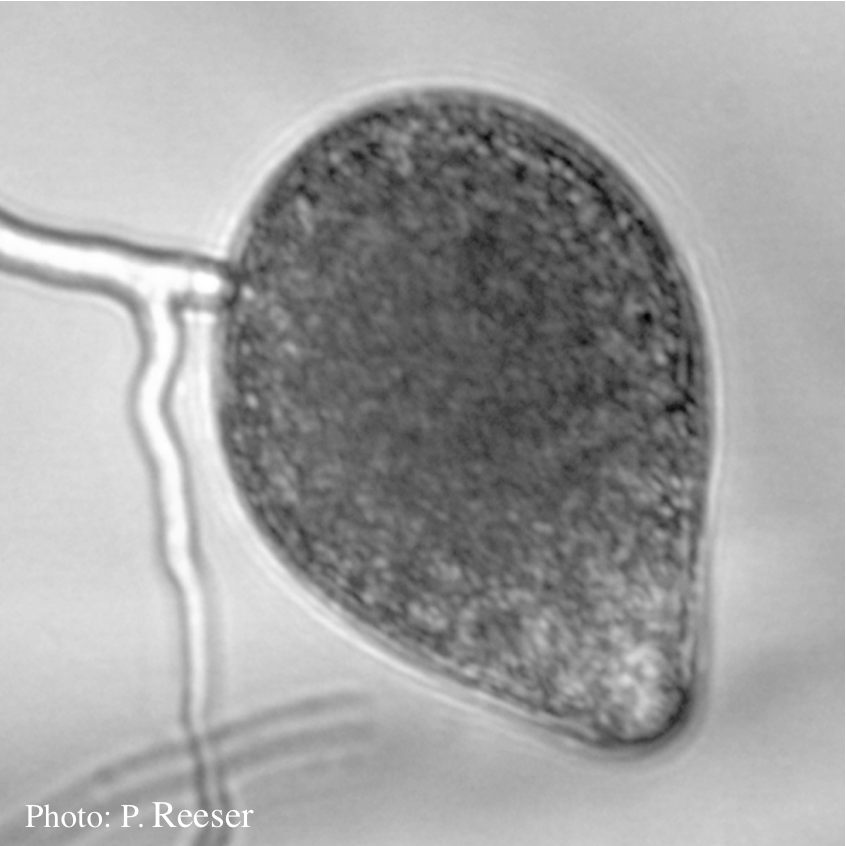 Sporangia showing typical ovoid shape and semi-papillate condition |
|
P. boehmeriae sporangium 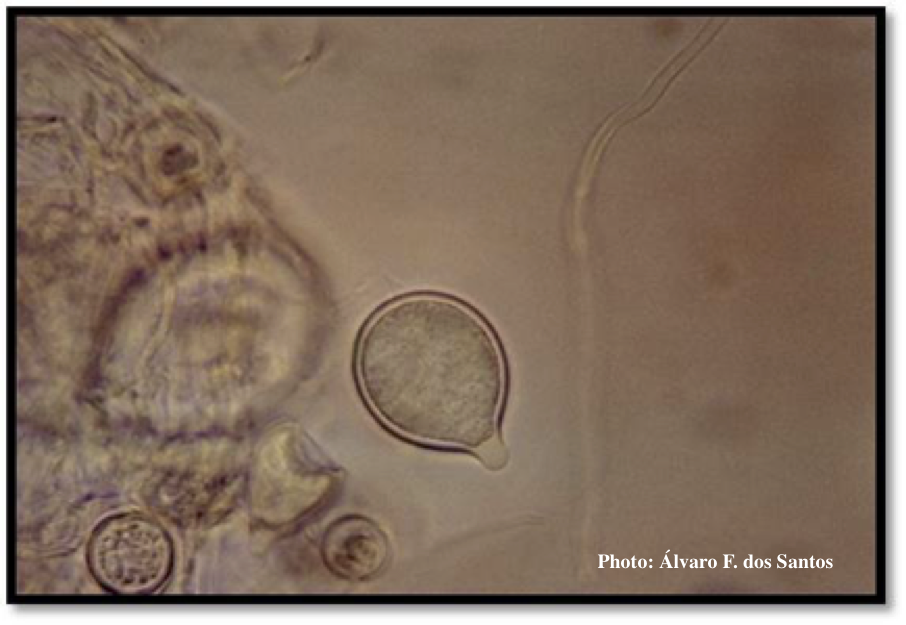 Sporangium showing ovoid and ovoid to spherical shape and papillate condition |
P. cambivora colony morphology on PDA 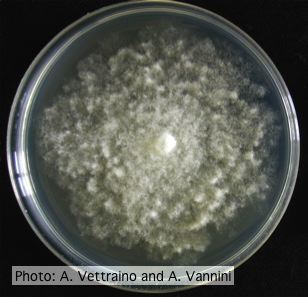 Rosaceous colony morphology at 14 days at 20°C on PDA |
P. katsurae disease symptoms 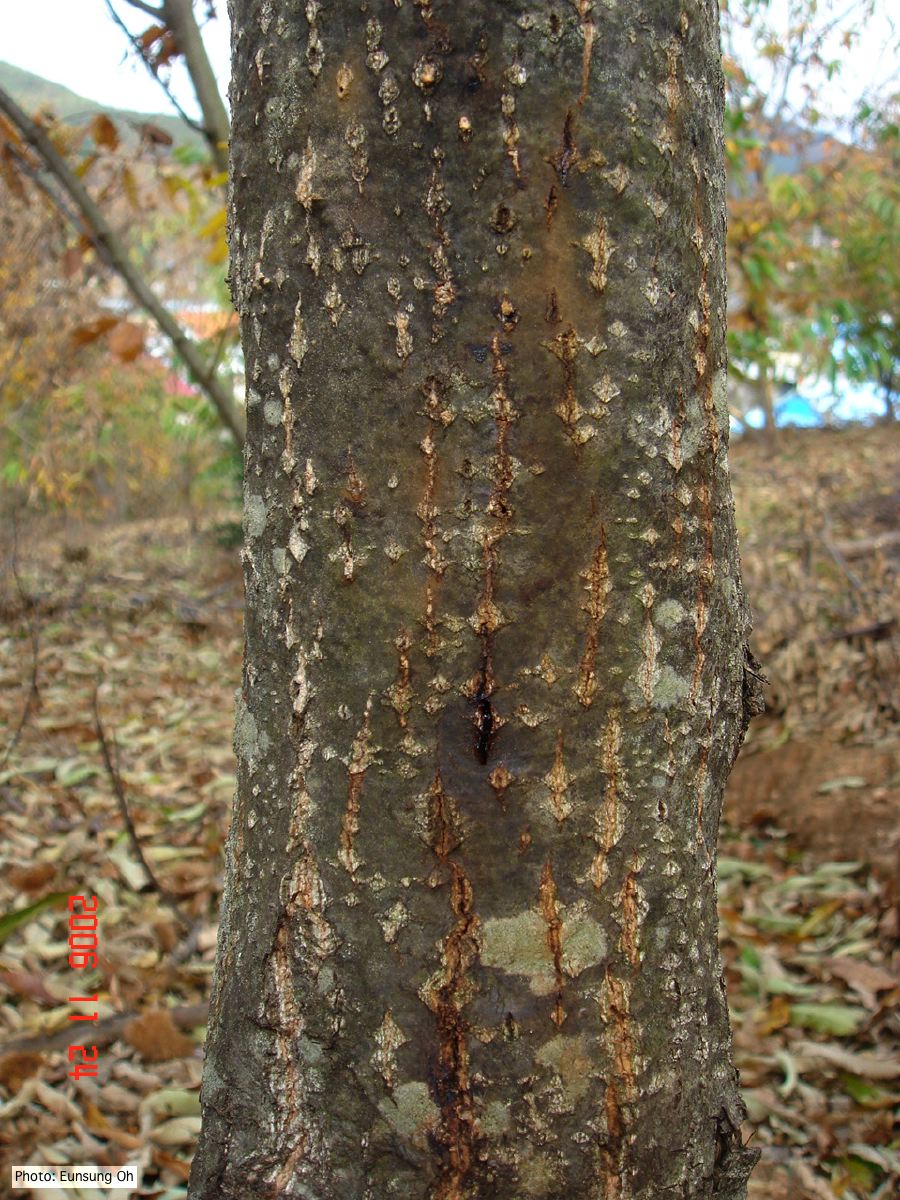 Infected chestnut (Castanea) with bleeding canker |
|
P. arenaria disease symptoms on Banksia landscape 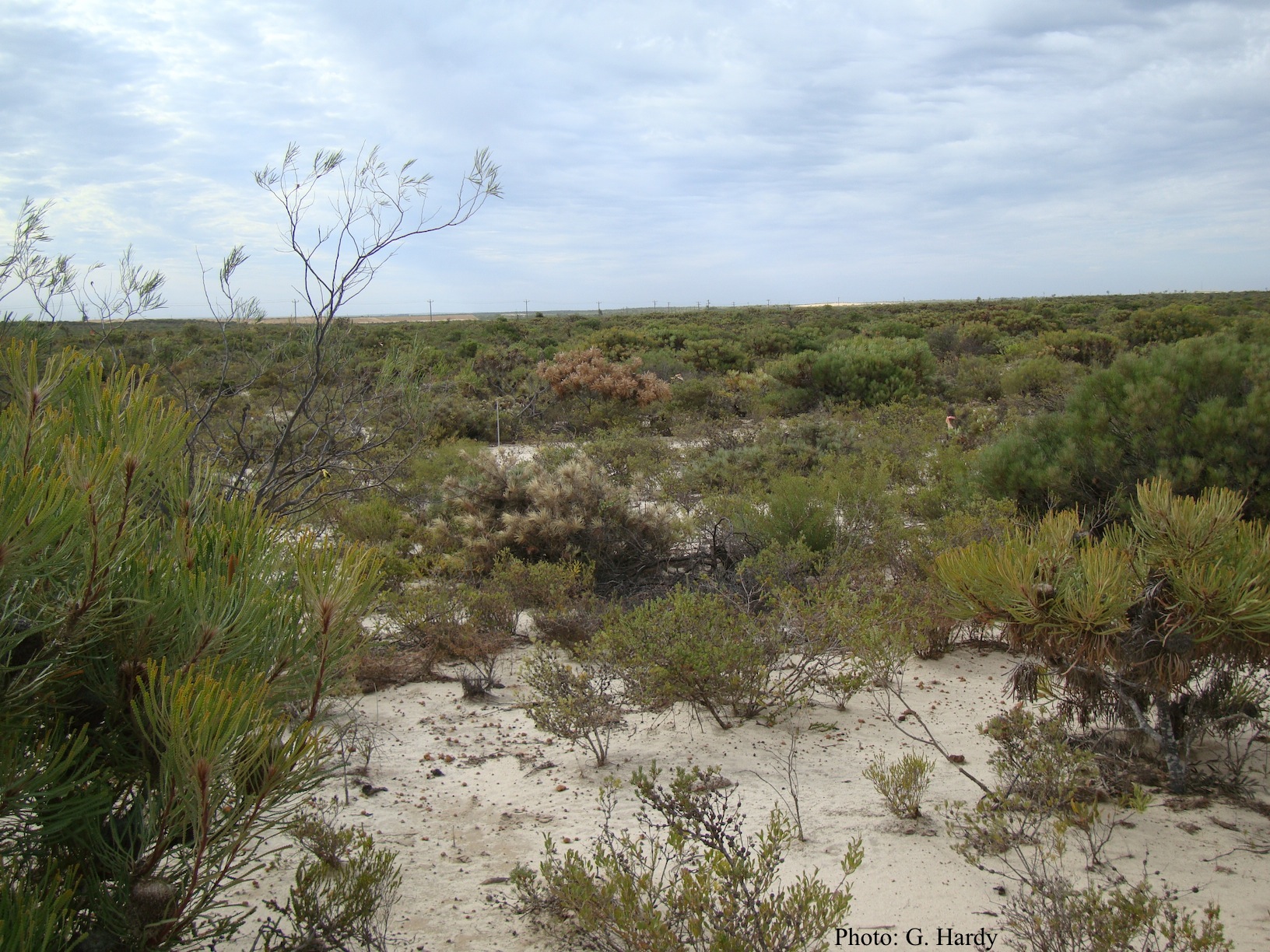 Dead Banksia sp. in a Kwongan heathland on mineral sand near Eneabba, Western Australia recently killed by root and collar rot caused by Phytophthora arenaria |
P. boehmeriae oogonium 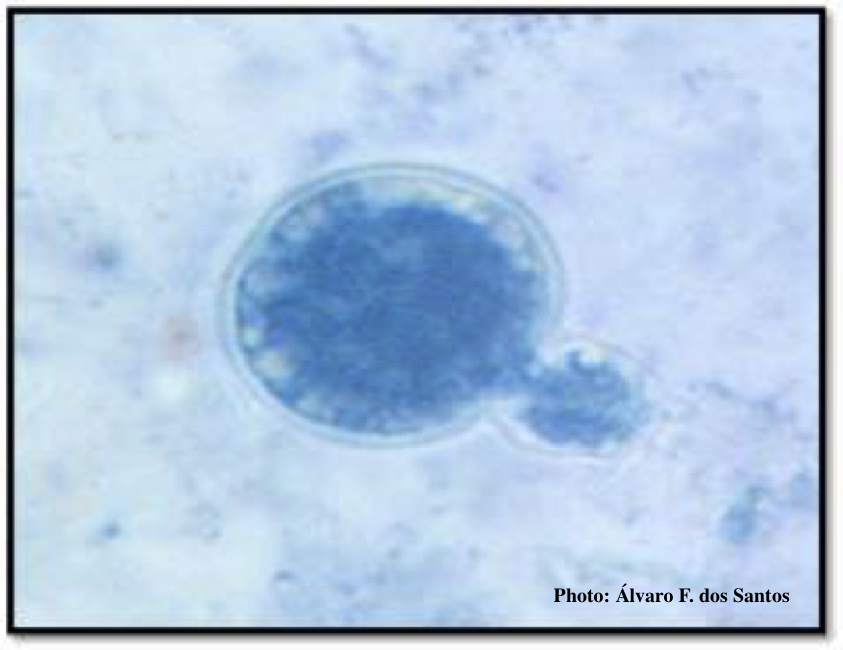 Oogonia and oospores with amphigynous antheridia |
P. arenaria sporangia 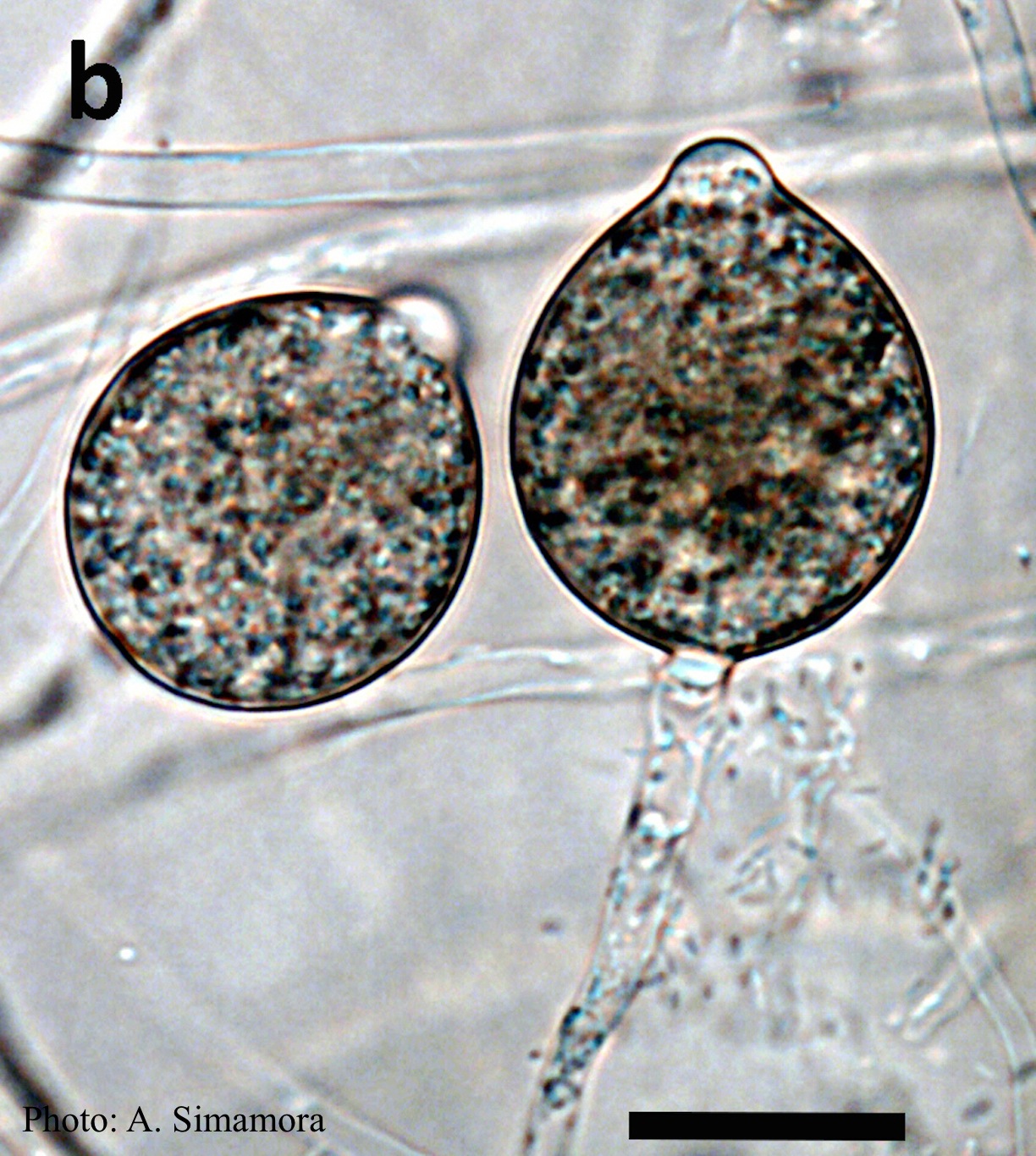 Globose papillate sporangia of Phytophthora arenaria on V8 agar flooded with soil extract. (Scale bar = 20 μm) |
|
P. lateralis on Port Orford cedar 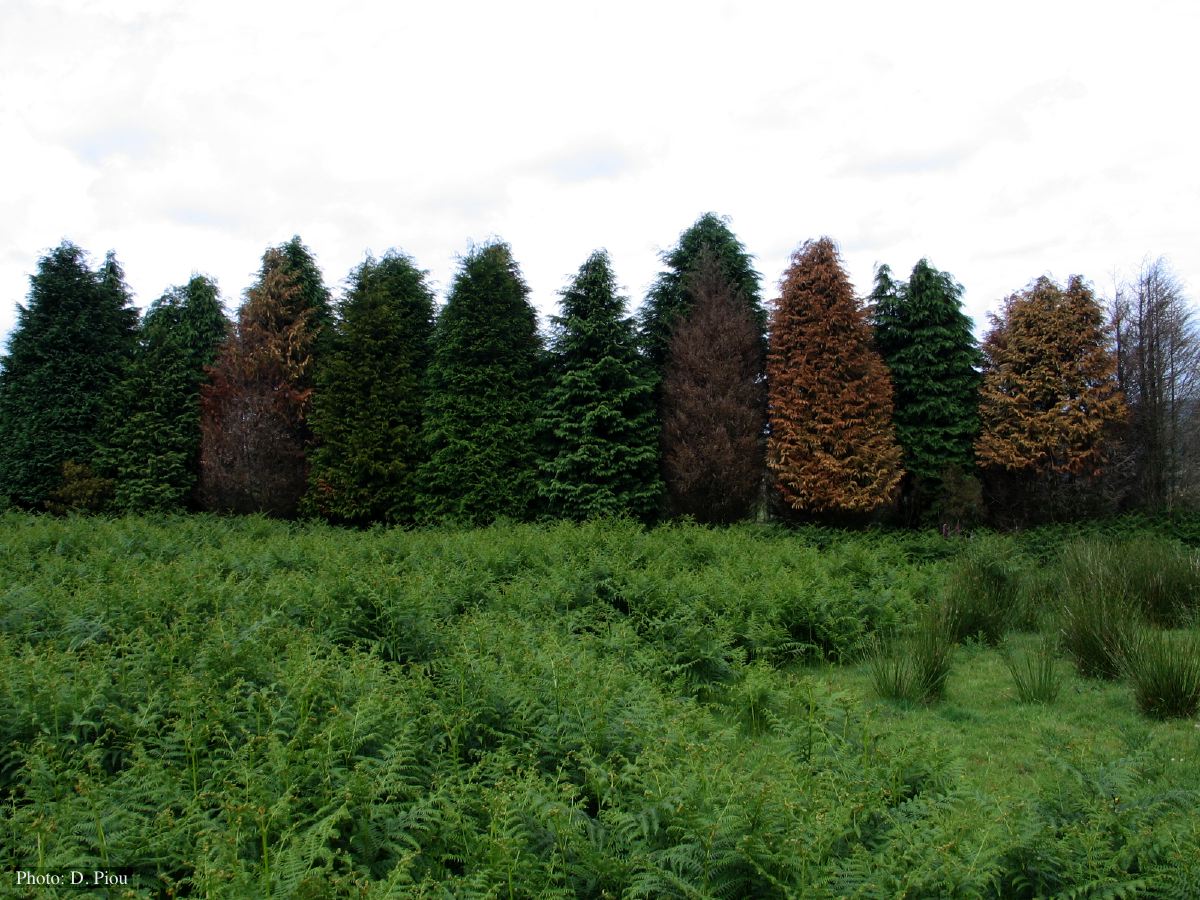 Dying Chaemacyparis lawsoniana trees in Lopérec, France. |
P. palmivora oogonium 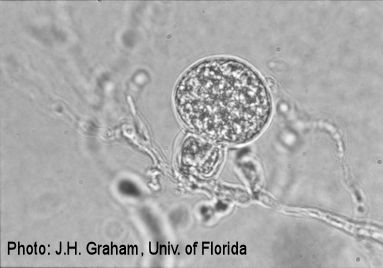 P. palmivora oogonium |
P. pluvialis on Pinus radiata in New Zealand 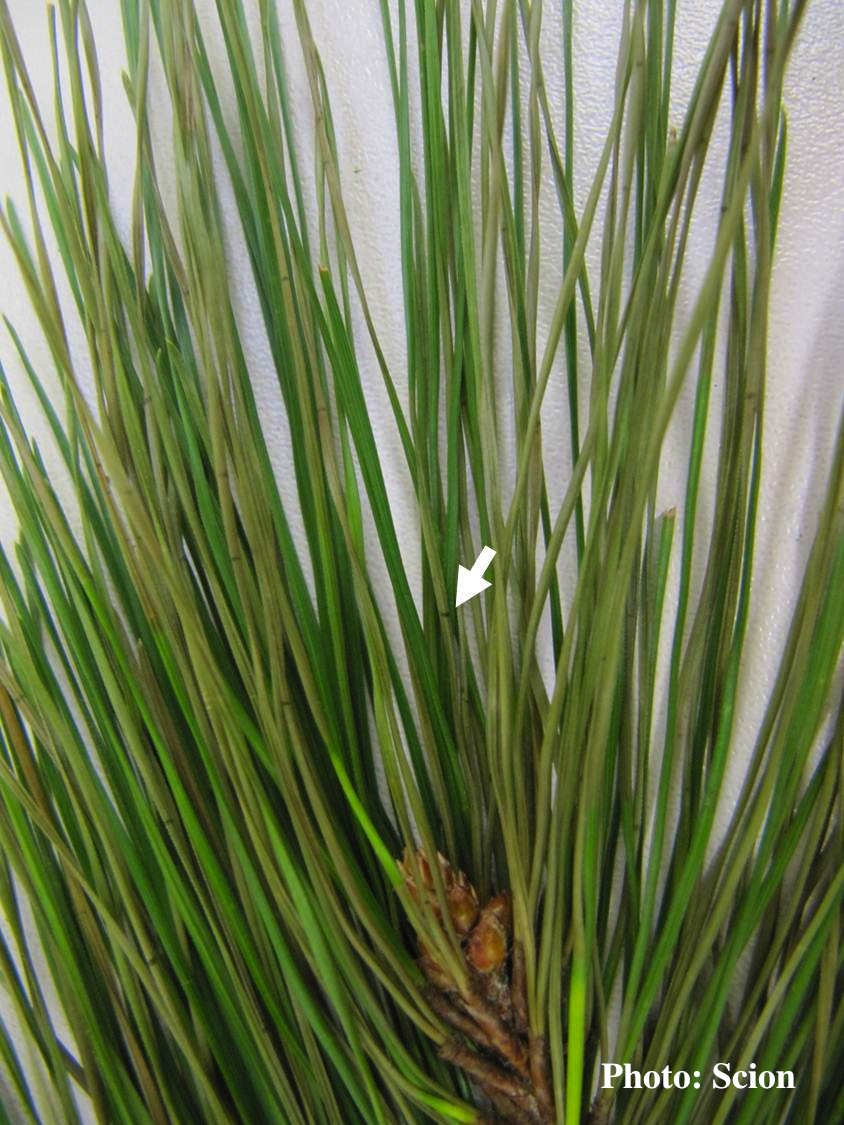 A Pinus radiata needle showing faded olive- or khaki- coloured lesions consistent with the presence of red needle cast disease. Arrow shows resinous bands within the extended olive lesion. |